
Dated but OK content
The screen shots in this chapter are from 2019, but the fundamentals of using both UpWork and Reedsy have not changed. Next time I engage a contractor from either of these sites, I’ll give this chapter a refresh.
If you are technically challenged, this chapter is for you.
If you are struggling to find a good editor, get a cover designed, or get a book formatted this chapter is for you.
And if you understand all the steps needed to set up your indie publishing business, but have said to yourself, “I can do all of this, but you know what, I would rather write”, this chapter is also for you.
For a new author, there is one relevant benefit to a traditional publisher. They will do all the technical bits that happen between your edited final draft and your book being available on bookshelves and online.
But they won’t do that first edit for you. They also won’t market for you. And this assumes you made it through the slush pile and found a publisher.
I am traditionally published, and if you think you can submit a draft manuscript and walk away to write your next book, you’re kidding yourself.
Which brings us to the obvious question why any author would give away all their rights and most of their income to end up doing much of the hard work themselves?
I believe the number one answer to this is because of the perceived cost and difficulty of hiring someone to complete the tasks you either don’t have the expertise to complete or don’t want to do.
What if I told you there is a way to spend a few hours and a few hundred dollars to offload the tasks you don’t want to do or don’t possess the technical skills to do?
Most of you would have heard of freelancing and outsourcing. You may also have heard that it’s difficult to find competitively-priced freelancers with professional skills, rather than amateurs looking for a quick buck.
This has been the case in the past, but the market has consolidated and matured. The irony is massive layoffs in traditional publishing have contributed to the jump in quality in freelance marketplaces. Many publishing professionals laid off by their employers now make their living as a freelancer.
As an author, there are only two markets you need to consider—Upwork and Reedsy.
Upwork is the 500-pound gorilla in this space; created by the merger of several freelance marketplaces including eLance and RentACoder. Upwork still leans to its IT industry origins and is heavy on programmers and web designers, but it also has an active publishing services marketplace.
Reedsy is a freelance marketplace specializing in publishing services. Launched in 2014, Reedsy’s mission is to “[give] authors and publishers access to talented professionals, powerful tools, and free educational content.”
Comparing the two, Upwork is a bigger marketplace for services other than book publishing, and if you are on a budget, there are more low-priced options on Upwork. The primary advantage of using Reedsy is it’s for authors and publishers, so it can be easier to find a professional suited to the job than on Upwork.
If you only want help with publishing and marketing books, I would recommend Reedsy. You will pay more, but you will also get more vetted professionals that specialize in book publishing.
There is a trick to effective use of each platform, which I will show you now.
Using Upwork
- Search for “upwork”, or go to “https://upwork.com” in your favorite browser and sign up for a free account. Once you create your free account on Upwork, your dashboard should look something like the screenshot below.
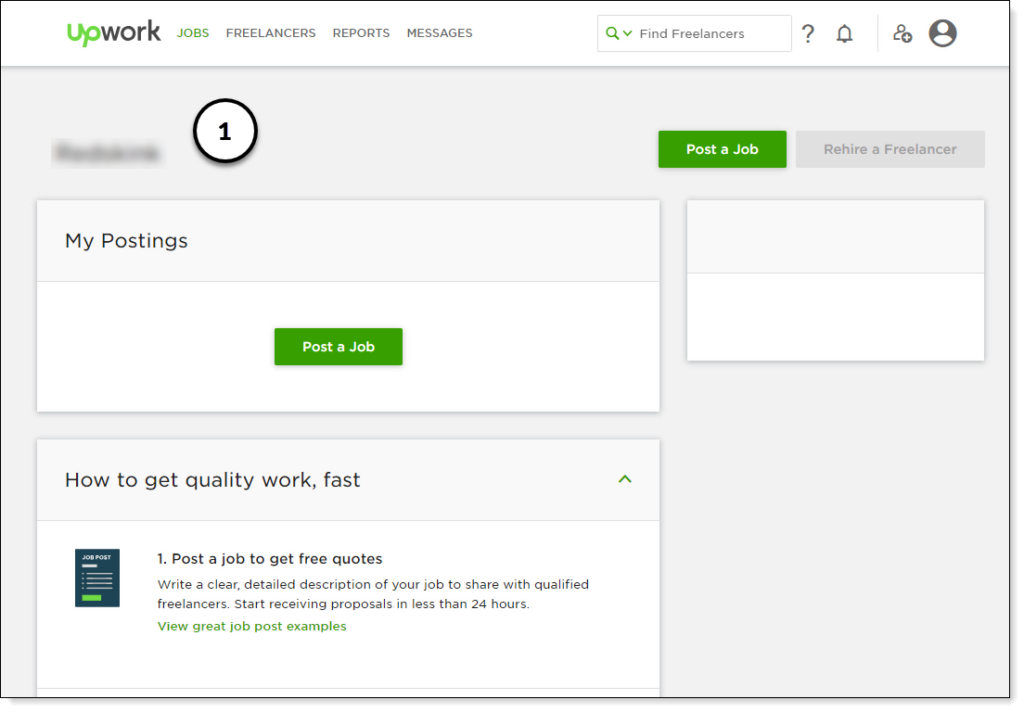
There are two ways to find a freelancer on Upwork:
- Post a job description so freelancers can submit a quote; or
- Find a suitable freelancer and invite them to quote on the job.
Option 1 is useful if you want to feel out the market and review what services are on offer, but I don’t recommend it for an efficient long-term option.
Upwork is not selective; anyone can join the platform and offer their services. This means there are thousands of freelancers on Upwork with poor technical skills and even worse English language skills.
If you post an open job, you will most likely need to sift through dozens of opportunistic quotes from low-skilled freelancers to find suitable candidates.
The best way to find a professional on Upwork is to find a freelancer with a good work history and relevant expertise and ask them to provide a quote.
- Click on “Freelancers” in the top menu and select “Find Freelancers”.
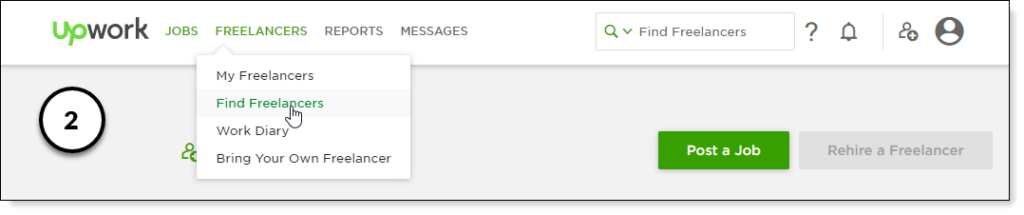
- Once on the search page, type the job category into the search bar. In this example, I am searching for “editing and proofreading”. This search will return thousands of results, so click the Filters button.

The filtering options are comprehensive. I find the best results come from the following filter set:
- Earned Amount—$10K. You want someone with earnings history.
- Job Success—90% & up. The freelancer has completed most of their jobs.
- Hourly Rate—$10–$30. You can go higher if you can’t find the person you want.
- Hours Billed—100+ hours. Similar to Earned Amount, more hours billed means greater experience.
- Category. Select a category based on what type of writing you’re submitting.
- English level—Native or bilingual. Expert or native English is critical for writing-related jobs, but not so much if you want a designer or someone to do a technical job.
The last two filters are not important. As you can see from the screenshot, by the time you filter down to this level, the “Talent Type” and “Last Activity” make little difference to the total number of freelancers in the filtered list.
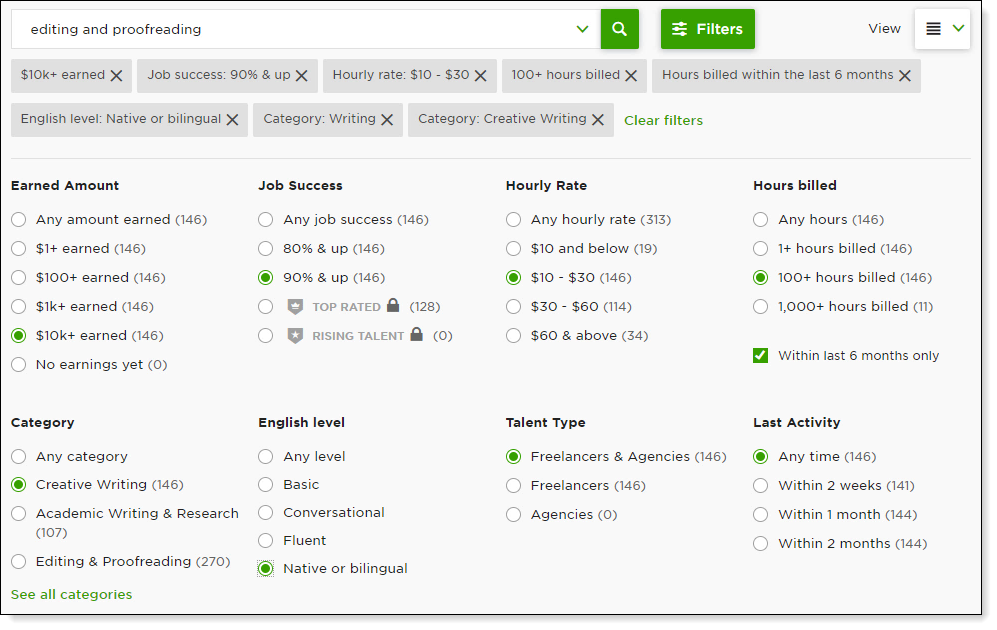
This filter set will give you a list of well-established freelancers with a history of delivering results. Once you apply the filters, you will have a list of between 50 and 150 freelancers. If you are outside this range, tweak the filter.
When you finish filtering, click on the profile link for each candidate, look at their work history, and short-list the ones you like. You need not go through every profile on the list. Once you have short-listed about six candidates, you can stop.
Once you have your short list, open each freelancer’s page, and invite them to quote on a job. If you have worked with a freelancer before and want to hire them again, you can also hire them from their profile page.
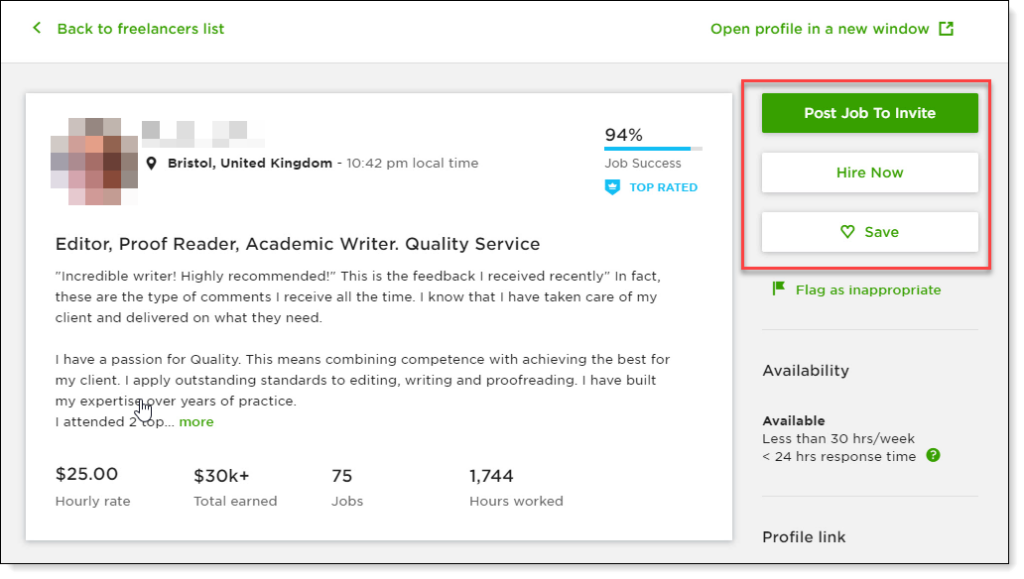
There’s not much more to Upwork. Once you and a freelancer agree on the job scope and price, they do the work, and if you’re happy, you pay their invoice.
Using Reedsy
Using Reedsy follows a similar process.
- First, jump over to “https://reedsy.com” and sign up for a free account. Once you sign up, your dashboard should look like the screenshot opposite.
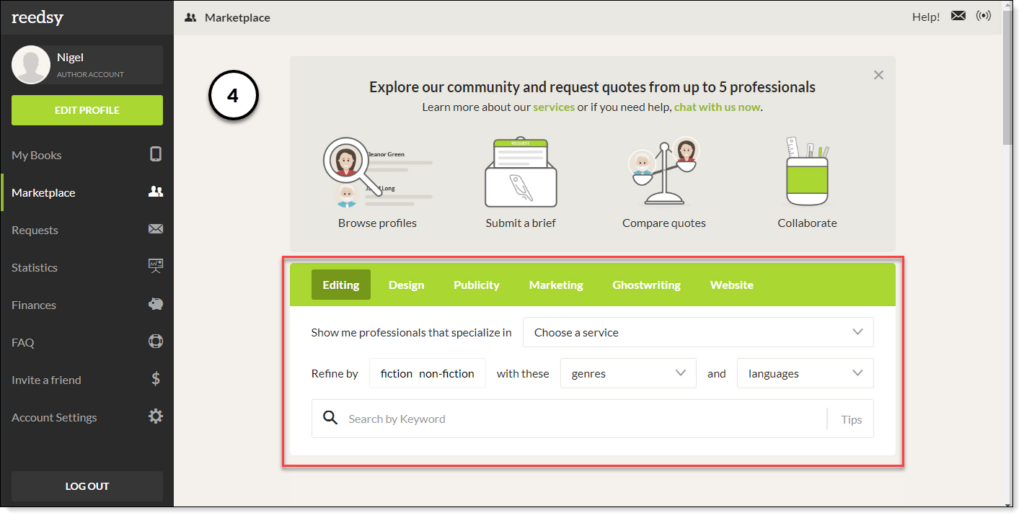
Searching and filtering are much simpler on Reedsy. You can select from Editing, Design, Publicity, Marketing, Ghostwriting and Website categories and filter down by service type, fiction/non-fiction genre, and language.
Once you set the filters, you can explore the filtered list of freelancers for suitable candidates.
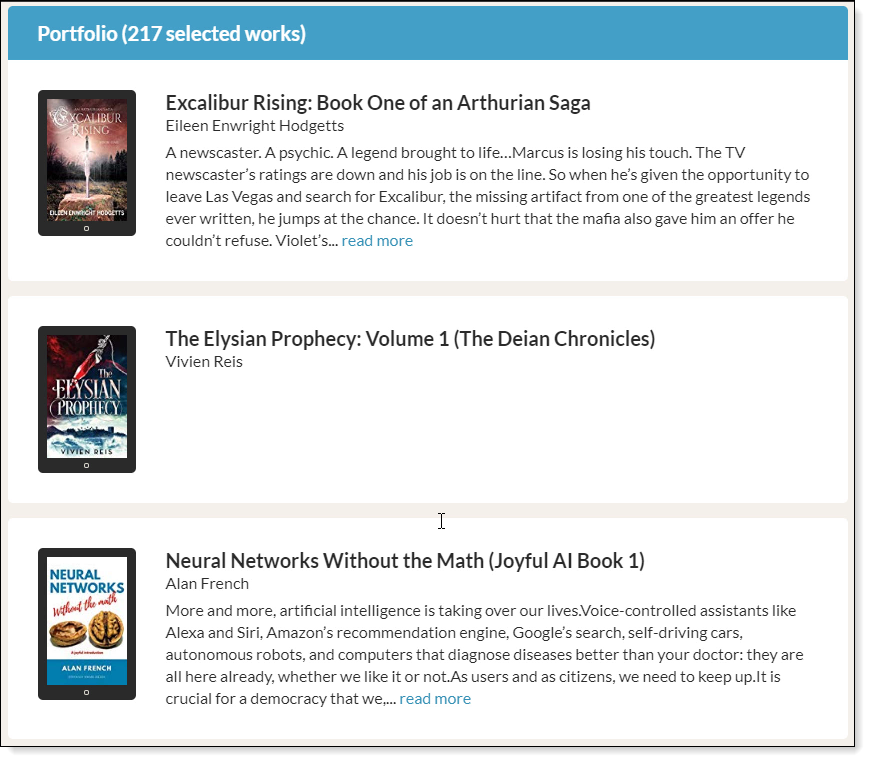
What I like about Reedsy is they provide a more detailed list of previous jobs completed by the freelancer than Upwork. This makes it much easier to find someone who has worked on books like yours.
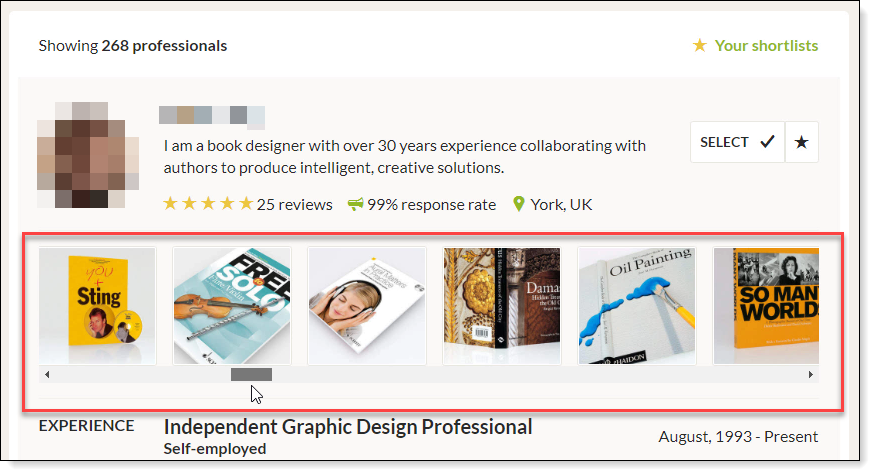
This feature is especially useful for finding designers. High-rated designers have portfolio sliders on the search page, and If you open a designer’s profile, there’s a design gallery. This makes it much easier to find a designer whose style matches your needs.

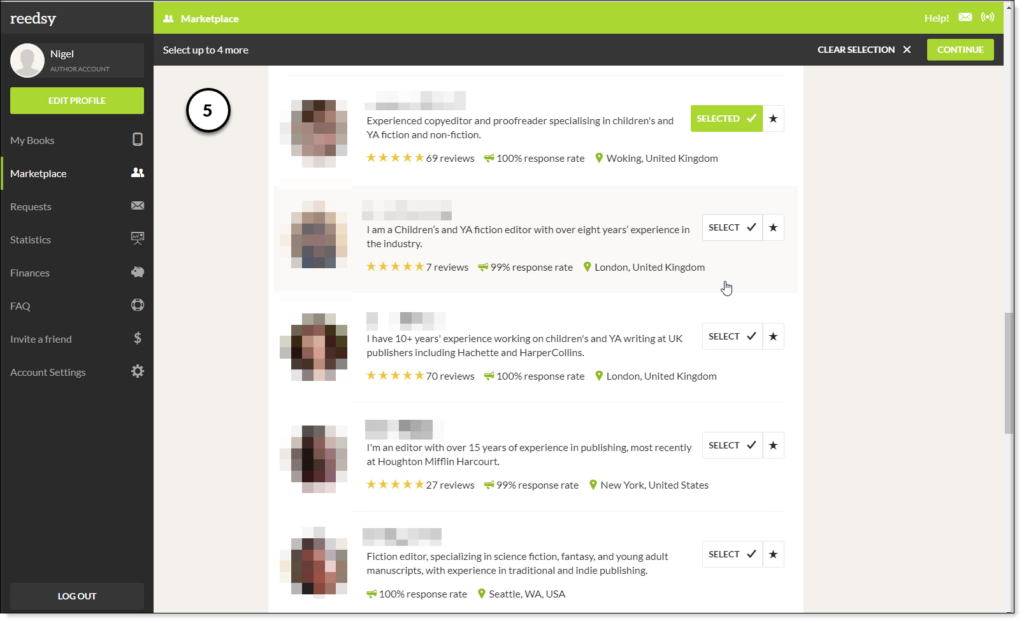
- Getting quotes on Reedsy is also much easier than Upwork. Click the Request a Quote button at the top of the freelancer’s profile. You can request a quote from up to 5 different freelancers in the one quote request. Fill out the quote request form and click Submit Brief when you’re finished.
Take your time to look around both UpWork and Reedsy. Even if you only end up using one or the other, I suggest you sign up for both and see which one you like best.
There is nothing an author will ever need that you won’t find on either of these sites. Both services cater to a range of budgets too. You can even hire people to do your marketing and outreach, freeing up even more time for your writing.
And that, dear friends, completes the setup of your very own Indie Publishing Machine. Well done!
You now have an author website, a mailing list to collect email addresses from your fans, and hopefully, some idea how you will conduct outreach to attract more fans.
You also know where to go if you need to hire professional help to build your indie publishing empire.
The last two chapters in the book are for reference. In the next chapter, I provide answers to common questions about outreach, and in the last chapter, I have collated a list of author resources I found helpful in my indie publishing journey.